Self-employed and your income is never the same two months running? Here's how to actually budget.
Most budgeting advice assumes a steady monthly number. Self-employed income doesn't work like that — here's how to budget per payment instead of per month.
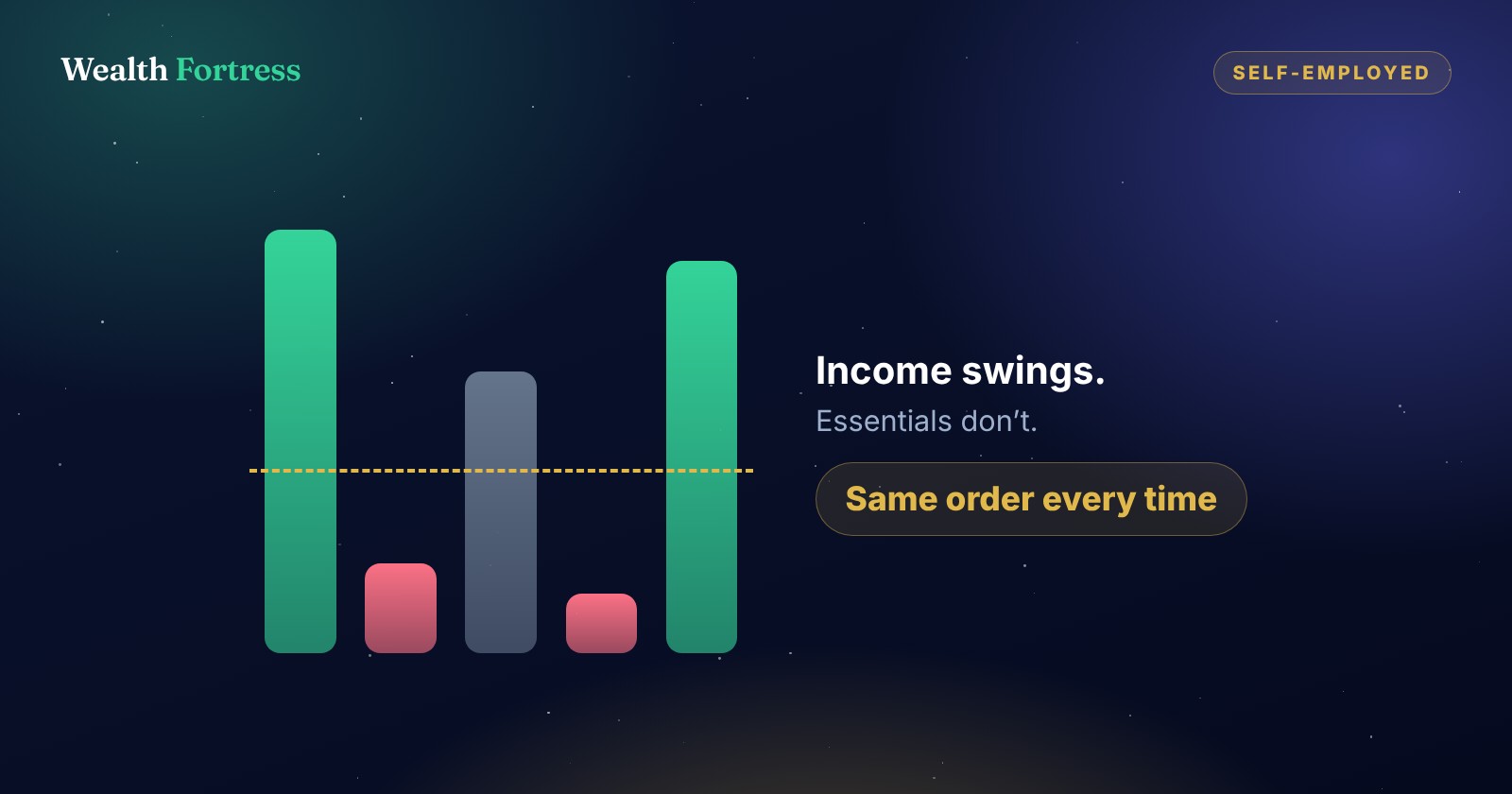
- Budgeting against an average fails when your income swings from month to month.
- Treat every payment as its own budgeting event, the moment it lands.
- Same order every time: tax first, essentials second, the rest last.
Almost every piece of budgeting advice starts the same way: work out your monthly income, then divide it up. That works fine if you're on a salary. If you're self-employed, it falls apart almost immediately, because there is no "monthly income" — there's a good month, a quiet month, three invoices that all land in the same week, then nothing for five weeks after that.
Budgeting against an average feels sensible until you actually try it. Average out a feast-and-famine income and you'll consistently overspend in the lean months (because the average said you'd have more) and underspend the recognition of a good month (because you're bracing for the next quiet stretch). Neither is really budgeting — it's guessing with extra steps.
The shift: budget the payment, not the month
The more reliable approach is to stop thinking in months at all, and instead treat every single payment as its own small budgeting event the moment it lands. Every time money comes in, the same three questions apply, in the same order, regardless of whether the payment is £200 or £4,000:
Budget the payment, not the month.
1What's owed to HMRC, off the top
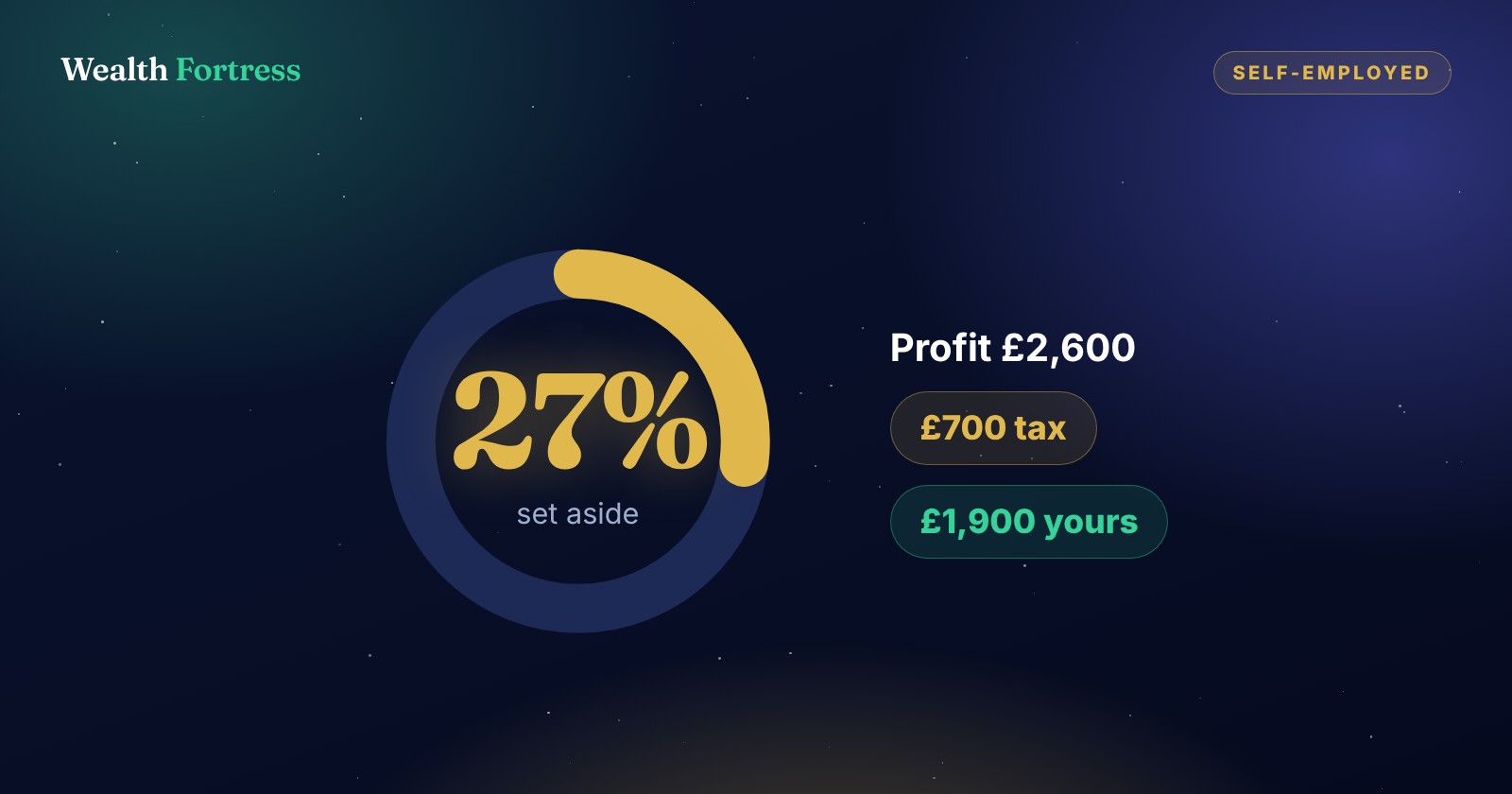
Because self-employed income arrives before tax, not after it, the tax portion isn't really yours to begin with — it's already spent, you just haven't sent it yet. Reserving that share the moment the payment lands (rather than calculating it at year-end) is the single habit that prevents the nasty surprise bill. We wrote a fuller breakdown of what to actually set aside and why the second year catches people out in how much to set aside for tax as self-employed.
2What the household actually needs, regardless of size
The rent or mortgage doesn't care whether this was a good invoice or a small one. A fixed baseline for essential costs needs to come off every payment that's responsible for covering them — not "whenever there's enough," but every time, so a run of smaller payments doesn't quietly leave a gap that only shows up when the direct debit bounces.
3Only then, whatever's left
Once tax and essentials are actually reserved — not estimated, reserved — whatever remains is genuinely free to route toward a buffer, debt, investing, or guilt-free spending. In a lean month that might be very little. In a good month it might be a lot. Either way, you're never spending money that already had a job to do.
This payment-by-payment approach is the whole design behind how MoneyMap routes self-employed income — tax reserved first, essentials reserved next regardless of how much or little came in, and only the genuine remainder gets split further. It removes the guesswork of "is this a big enough payment to also cover the mortgage" every single time you're paid.
The lean-month test
A good way to check whether your system actually works: imagine your smallest realistic payment landing on its own, with no other income that month. Does tax still get reserved? Do essentials still get covered, even partially? If the honest answer is "well, I'd probably just wing it," that's the gap worth fixing before a genuinely quiet month arrives.
If you want to see this routing in action against your own numbers, Wealth Fortress's paid plan includes MoneyMap with a 3-day free trial — or if you just want a starting split first, Golden Percentages is free and takes about two minutes.
See every payment routed
Try MoneyMap with sample numbers. Nothing is saved and there is no signup.
Open the MoneyMap demo