Personal Savings Allowance explained: how much savings interest is tax-free in the UK?
How the Personal Savings Allowance and the starting rate for savings work in the UK, how much interest you can earn tax-free, and how many savings that covers at different interest rates.
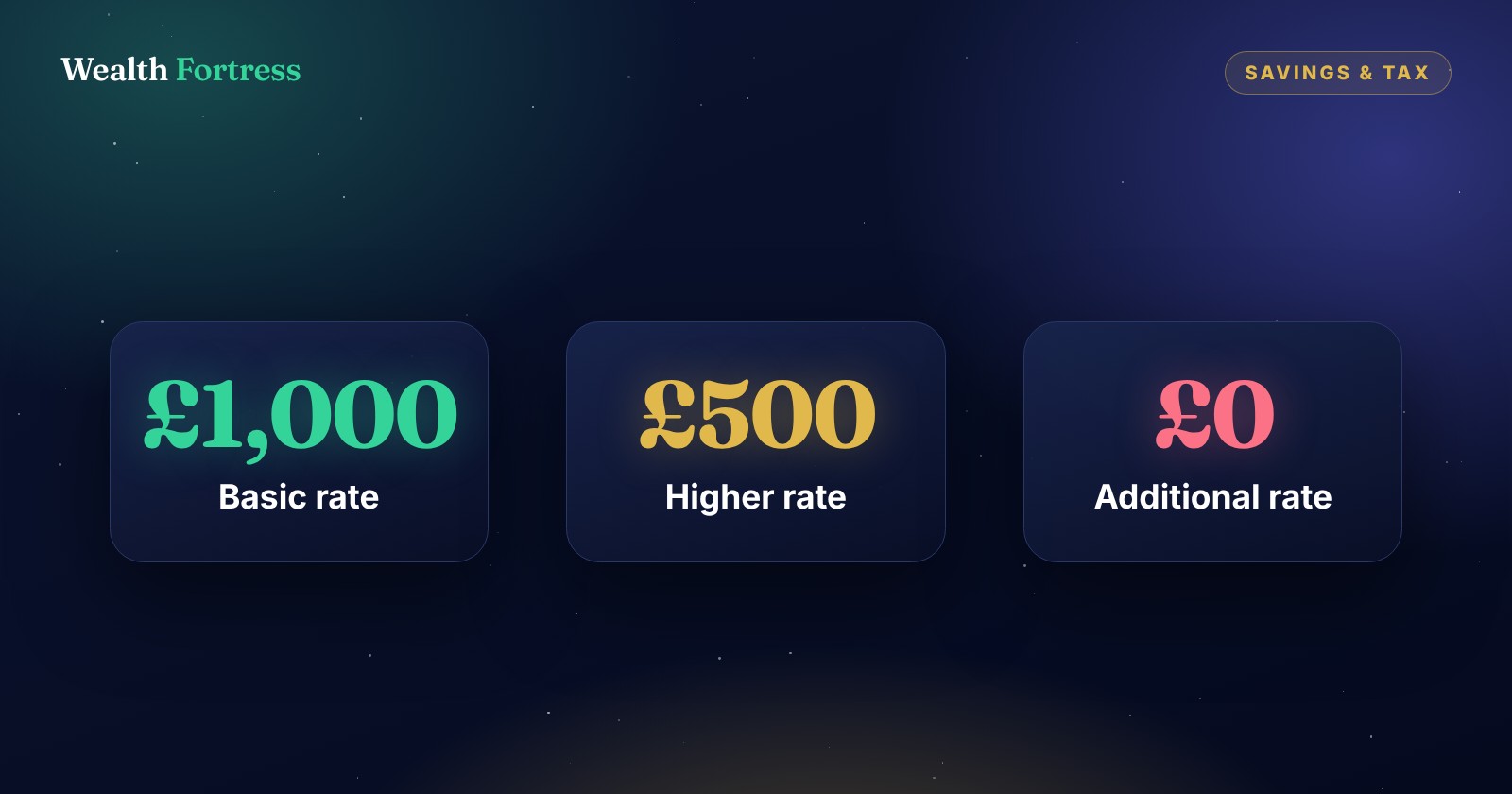
- Basic rate taxpayers can earn £1,000 of savings interest tax-free, higher rate £500, additional rate nothing.
- People on lower incomes may also get a 0% starting rate band of up to £5,000.
- Divide the allowance by your interest rate to see how much savings it covers.
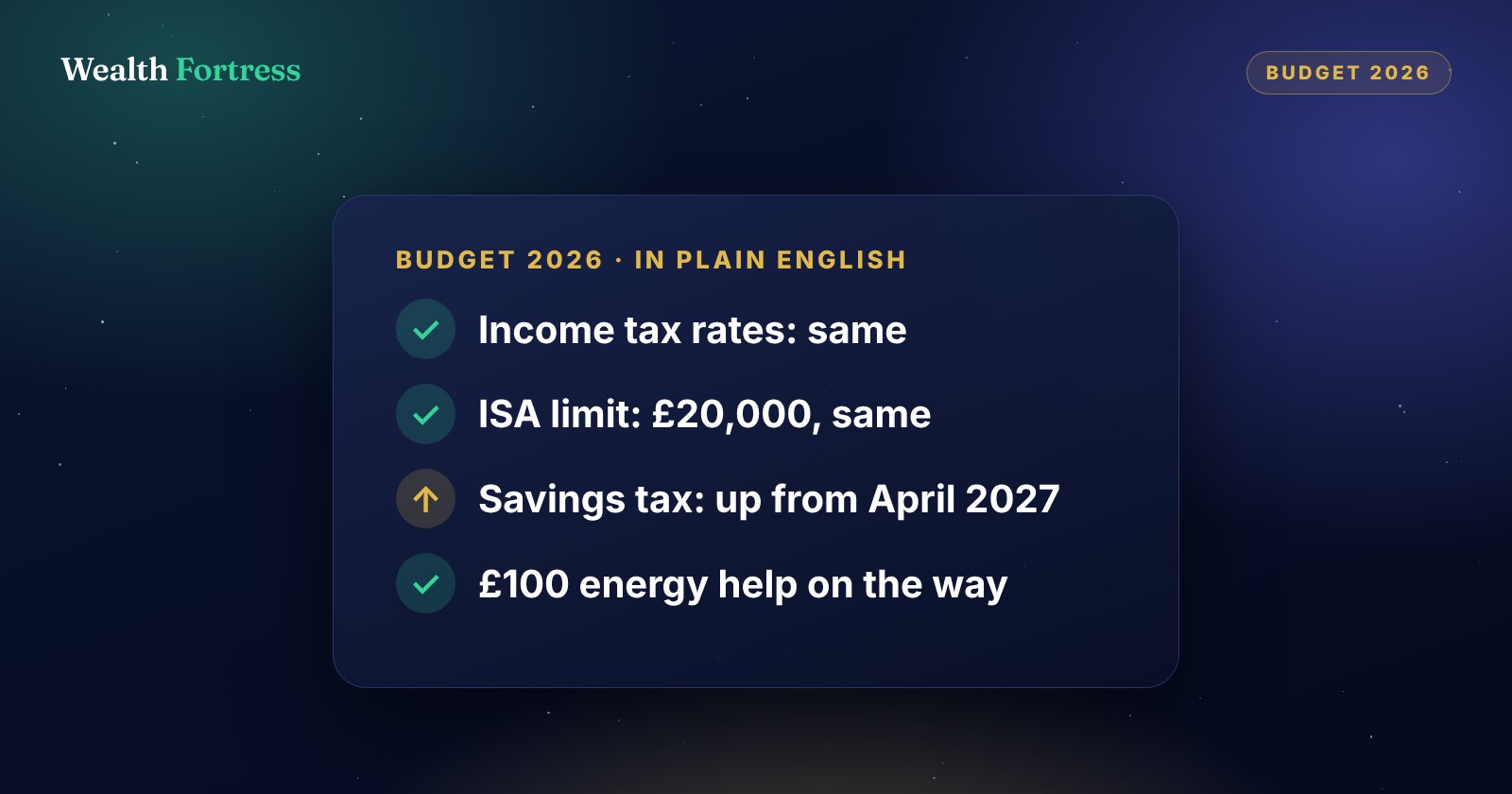
Most people in the UK can earn some savings interest without paying tax on it, but the rules depend on your income. With tax on savings interest set to rise in April 2027, it is worth understanding the allowances that protect you.
The Personal Savings Allowance
The Personal Savings Allowance is the amount of savings interest you can earn each tax year without paying tax. It depends on your income tax band. Basic rate taxpayers get £1,000. Higher rate taxpayers get £500. Additional rate taxpayers get nothing. These amounts are unchanged for 2027/28.
The starting rate for savings
On top of that, people with lower incomes may get a 0% starting rate band of up to £5,000 of savings interest. It is reduced by £1 for every £1 of your other taxable income above the personal allowance of £12,570. In practice, if your other income is more than about £17,570, the starting rate band has gone completely. If your income is below the personal allowance, any unused part of the allowance can also cover savings interest.
ISA interest does not count
Interest earned inside an ISA is tax-free and does not use up any of these allowances. You can put up to £20,000 a year into ISAs. Only savings held outside ISAs count towards the allowances.
How much savings does the allowance cover?
A quick way to see where you stand is to divide your allowance by the interest rate you earn. At 4%, a £1,000 allowance covers about £25,000 of savings, and a £500 allowance covers about £12,500. At 5%, the figures drop to £20,000 and £10,000. At 3%, they rise to about £33,000 and £16,700. Remember that the allowance applies to all your accounts added together, not each one separately.
Two quick examples
Someone earning £14,000 has £1,430 of taxable income after the personal allowance. That leaves £3,570 of the starting rate band, so up to £3,570 of interest would be taxed at 0%, and the £1,000 Personal Savings Allowance sits on top of that. For most people in that position, savings interest causes no tax at all.
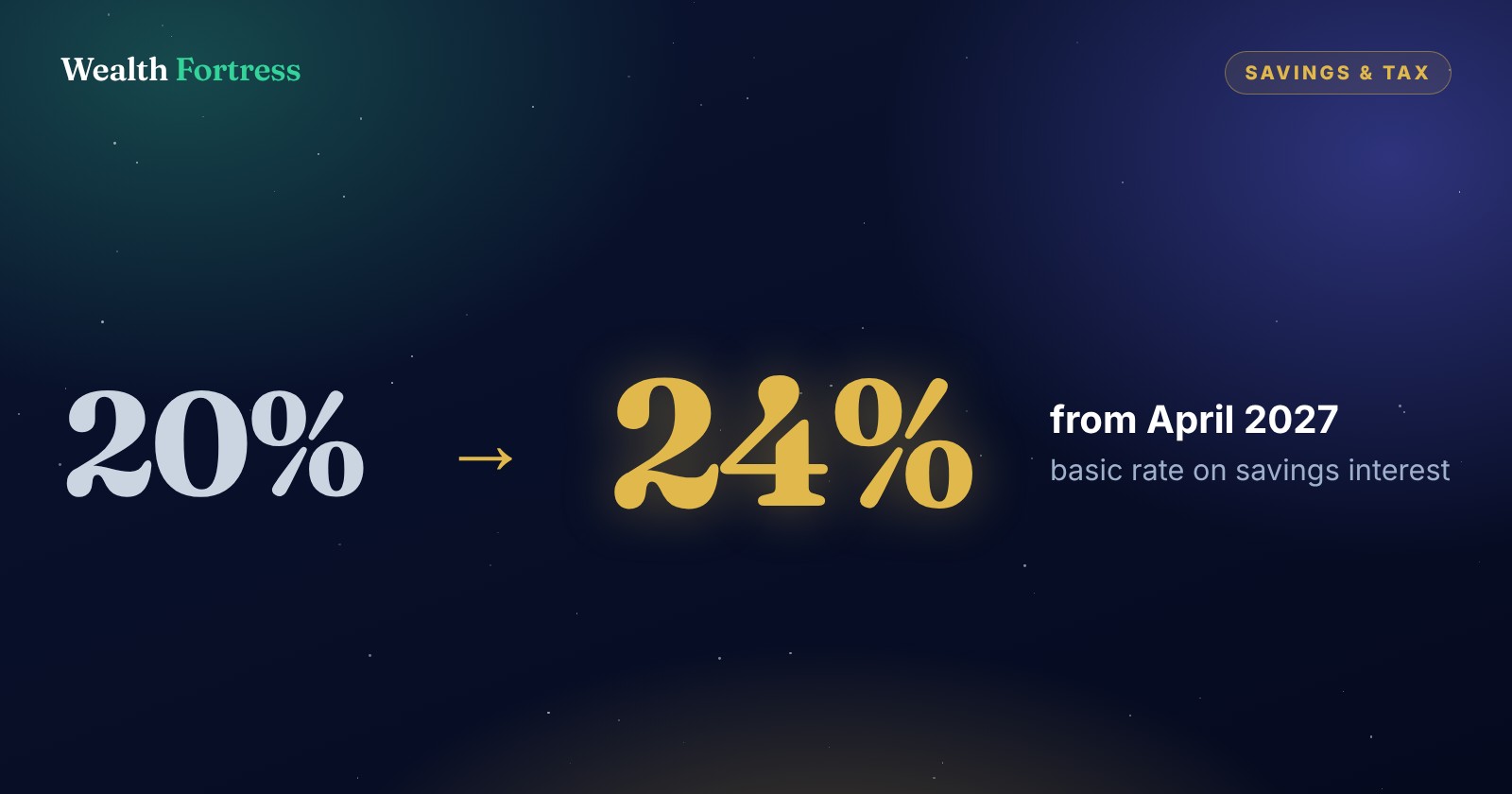
Someone earning £30,000 with £40,000 saved at 4% earns £1,600 of interest. The starting rate band has gone, so the £1,000 allowance covers the first part, and £600 is taxable at 20% today (£120 of tax). From April 2027, the same £600 would be taxed at 24% (£144).
How the tax is actually collected
Banks and building societies pay interest without deducting tax. If you owe tax on it, HMRC normally collects it by adjusting your tax code, or through Self Assessment if you already file a return. Keep an eye on your tax code notice if your savings have grown.
Check your own position
Our free Savings Tax Calculator applies these allowances to your own income and savings, and shows what changes from April 2027. You can read more about what is changing in our post on the April 2027 savings tax rise.
Work out your own savings tax
Enter your income and savings and compare this tax year with 2027/28. No signup.
Open the Savings Tax Calculator