The £100 energy payment: who gets it, and how to spot the scam texts
The Budget announced a one-off £100 payment for some households in England. Here is who it is for, when it is due, how councils will contact you, and how to spot a scam.
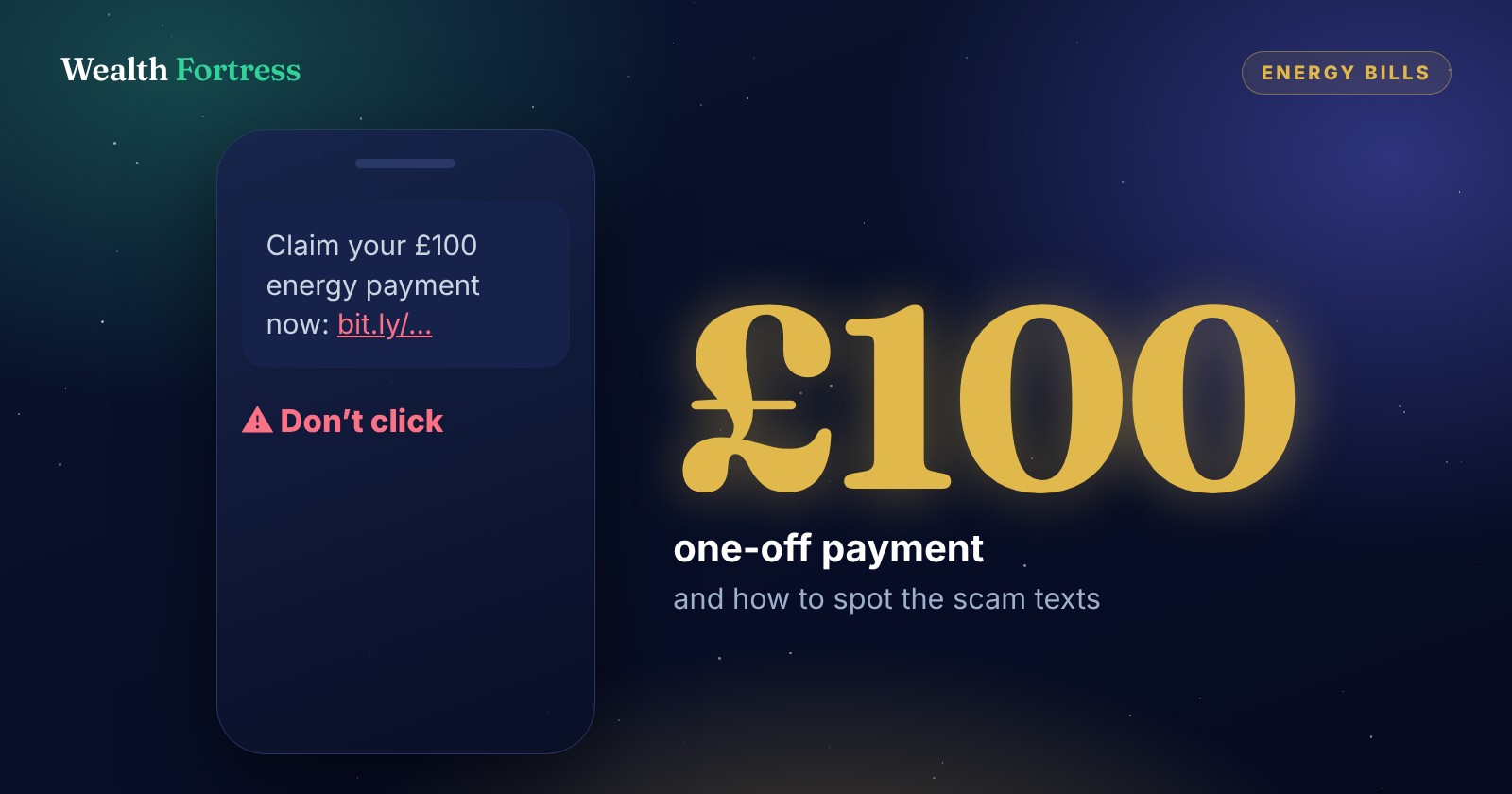
- A one-off £100 payment is planned for households in council tax bands A to D in England, from January 2027.
- It is normally delivered by your council. A link in an unexpected text is a warning sign.
- Forward scam texts free to 7726 and never share bank details through a link you were sent.
The Budget on 28 October 2026 announced a one-off £100 payment to help with energy bills. Whenever money is on offer, scammers follow, so it helps to know who should get it and how you should hear about it.
Who it is for
As announced, the £100 payment is for households in council tax bands A to D in England. It is a one-off payment, due from January 2027. The announcement covers England, and details can change, so check GOV.UK for the latest rules and for anything that applies elsewhere in the UK.
How you should hear about it
Payments like this are normally delivered by your local council. Reports after the Budget say that people who pay council tax by Direct Debit should be paid automatically, and that others should receive an invitation from their council to apply. You can find your council through GOV.UK.
How to spot a scam
If you did not apply for anything and no one has written to you from your council, be very careful. A text, email or call telling you to click a link to claim the £100 is a warning sign. Councils should not ask you for your full bank details or card number through an unexpected link, and a genuine message will not pressure you to act within minutes.
If you receive a message like that, do not click the link and do not reply. Instead, check with your council using contact details you have found yourself. You can forward scam texts for free to 7726, and report suspicious emails to the National Cyber Security Centre at report@phishing.gov.uk.
What £100 does against a price rise
It helps, but it is a one-off. If the energy price cap rises in January, a typical household could pay anywhere from about £13 to £39 more each month, depending on which forecast turns out right. On those numbers, £100 covers roughly three to eight months of the extra cost, and then it is gone. Our free Energy Bill Calculator shows what this means on your own bill, and our post on the January 2027 price cap covers the forecasts in more detail.
See the rise on your own bill
Put in your monthly bill, pick a forecast, and see the extra cost a month and a year. No signup.
Open the Energy Bill Calculator